How to Seal Pavers: When and How Often in Florida
Sealing pavers in Southwest Florida: sealer types, finishes, when to seal, how often to reseal and how it is applied. Free estimate: (239) 878-3404.
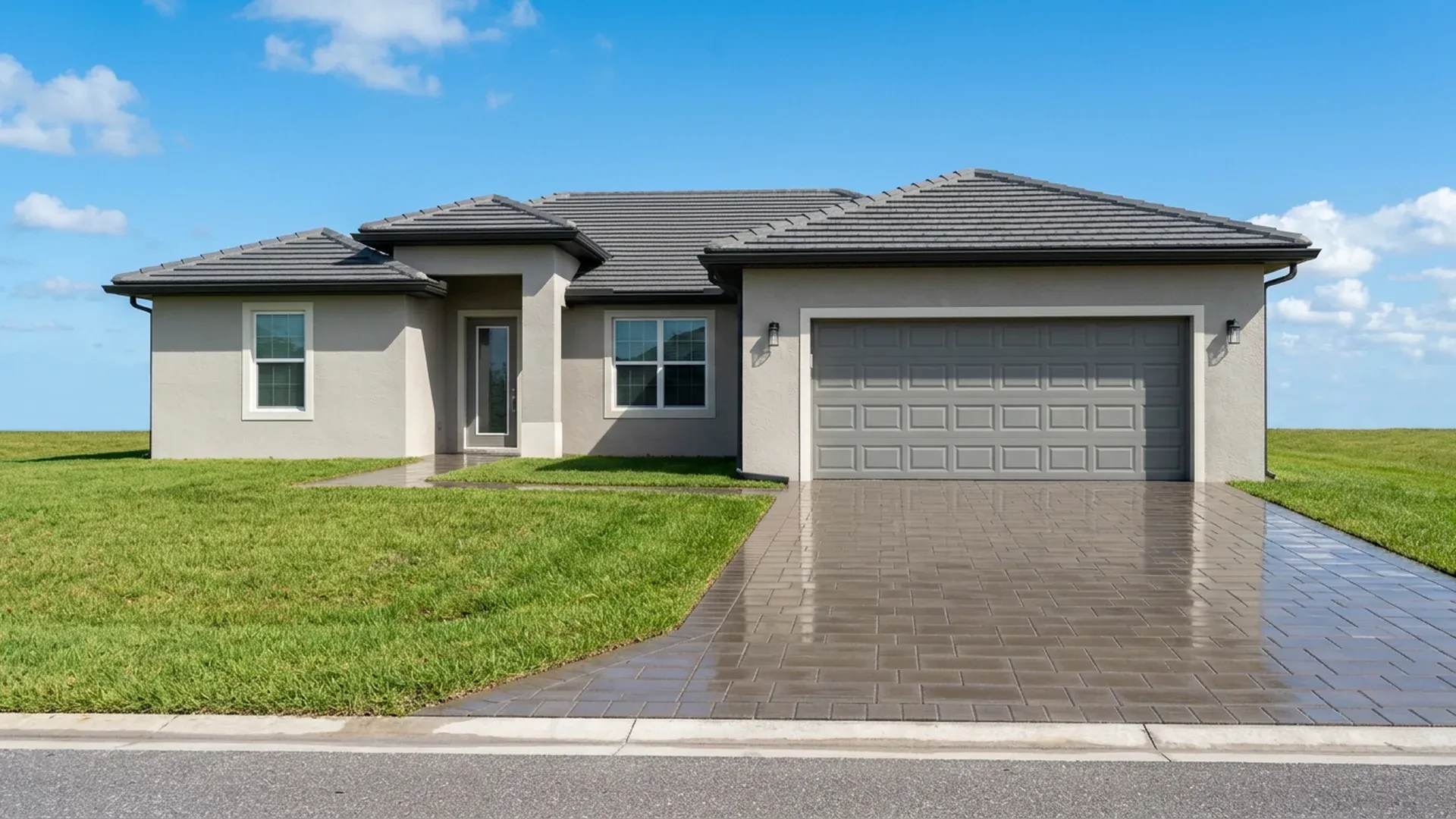
Sealing pavers means applying a protective liquid across the surface and joints of a driveway, patio or walkway so water, oil and dirt soak in less and the color looks richer. It is an optional upgrade, not a repair, and timing matters more in Southwest Florida than most homeowners expect. This guide covers what a sealer does, the main sealer types, finishes, when to seal new and older pavers, how often to reseal and how the work is done. For the installation side, see our overview of paver installation in Southwest Florida.
What Does Sealing Pavers Do, and What Does It Not Do?
The Concrete Masonry & Hardscapes Association says in its Tech Note PAV-TEC-005 that sealers reduce the intrusion of water, stains, oils and dirt, intensify paver color and help stop unwanted insects and weeds. In plain terms, a sealed surface cleans up more easily after a leaking car or a dropped plate of barbecue. The same bulletin states the limits: sealers do not increase the structural properties of a paver or the load capacity of the pavement. A sealer cannot level a sunken section, replace a washed-out base or stop a tree root from lifting a corner. If your pavers are uneven, start with our guide to sinking pavers repair, then seal.
Is Sealing Pavers Necessary in Florida?
Not always. CMHA's bulletin describes properly installed interlocking concrete pavement as low maintenance and treats joint stabilization or sealing as steps taken "if required," so sealing pavers is a choice rather than a rule. It makes the most sense where the surface takes abuse or where looks matter: a driveway that collects oil, an outdoor kitchen, a sunny patio with faded color or joints that keep growing weeds. Near the coast, CMHA adds that silane and siloxane sealers give extra protection to pavers exposed to salt air, and that they are useful around pool decks to limit damage from chlorine. For pool-specific questions, read our pool deck pavers guide.
Which Paver Sealer Types Should You Compare?
CMHA groups sealers by chemistry. Silanes and siloxanes are penetrating water repellents that leave a flat, no-gloss finish, let the stone breathe and can deter efflorescence, but they do not resist petroleum stains unless the formula includes additives for that. Acrylics, solvent or water based, deepen color, add gloss and resist stains, and CMHA says they generally last a few years before recoating. Urethanes give a high gloss and handle chemicals well, but they cannot be refreshed by recoating, and removing them often takes hazardous solvents best left to professionals. CMHA says alkyds, esters and polyvinyl acetates are not recommended for pavers, and epoxies and silicones are generally not used.
Natural, Satin or Wet Look: Choosing a Paver Sealer Finish
Finish is the most visible decision. CMHA notes that most sealers darken pavers and enhance their color, with some adding a glossy "wet" look and others leaving a low sheen or flat finish. Penetrating products tend toward the natural end, while film-forming acrylics and urethanes tend toward the glossy end. Slip resistance deserves equal weight in a state with frequent summer downpours. CMHA warns against over-applying sealer because the surface can turn slippery once cured, and it advises asking the manufacturer how a product performs wet and dry. Before committing, brush a small test patch in a low-visibility corner, let it dry fully and judge the color in morning and afternoon light.
When to Seal Pavers: New Installations and Older Surfaces
When sealing pavers that are new, patience pays. CMHA's PAV-TEC-006 generally recommends sealing after any efflorescence is under control, and a breathable sealer if it might return. Efflorescence is a white haze that CMHA says can appear right away or within months, may peak in as short as 60 days and may wait for the first wet weather when pavers go in during a dry period. In Florida, a patio laid in the dry season can therefore look clean until the summer rains arrive. For older pavers, seal after a thorough cleaning once color has dulled, oil or leaf stains soak in rather than wipe off, or joints keep losing sand to weeds.
How Often to Seal Pavers Again in Florida
There is no universal interval for sealing pavers a second time. CMHA's bulletin says sealers normally need reapplication after a period of wear and weather, and that the period depends on use, climate and the quality of the sealer. A driveway under daily tire traffic and full sun will wear its coating faster than a covered lanai floor. Instead of marking a calendar, watch the surface after rain: when water soaks in rather than beading, stains set quickly or the color looks flat, the coating is thinning. Check the product label for its own guidance, and write the sealer name and application date on a note in the garage so the next round starts with the same product.
Clean the Pavers and Check the Joint Sand First
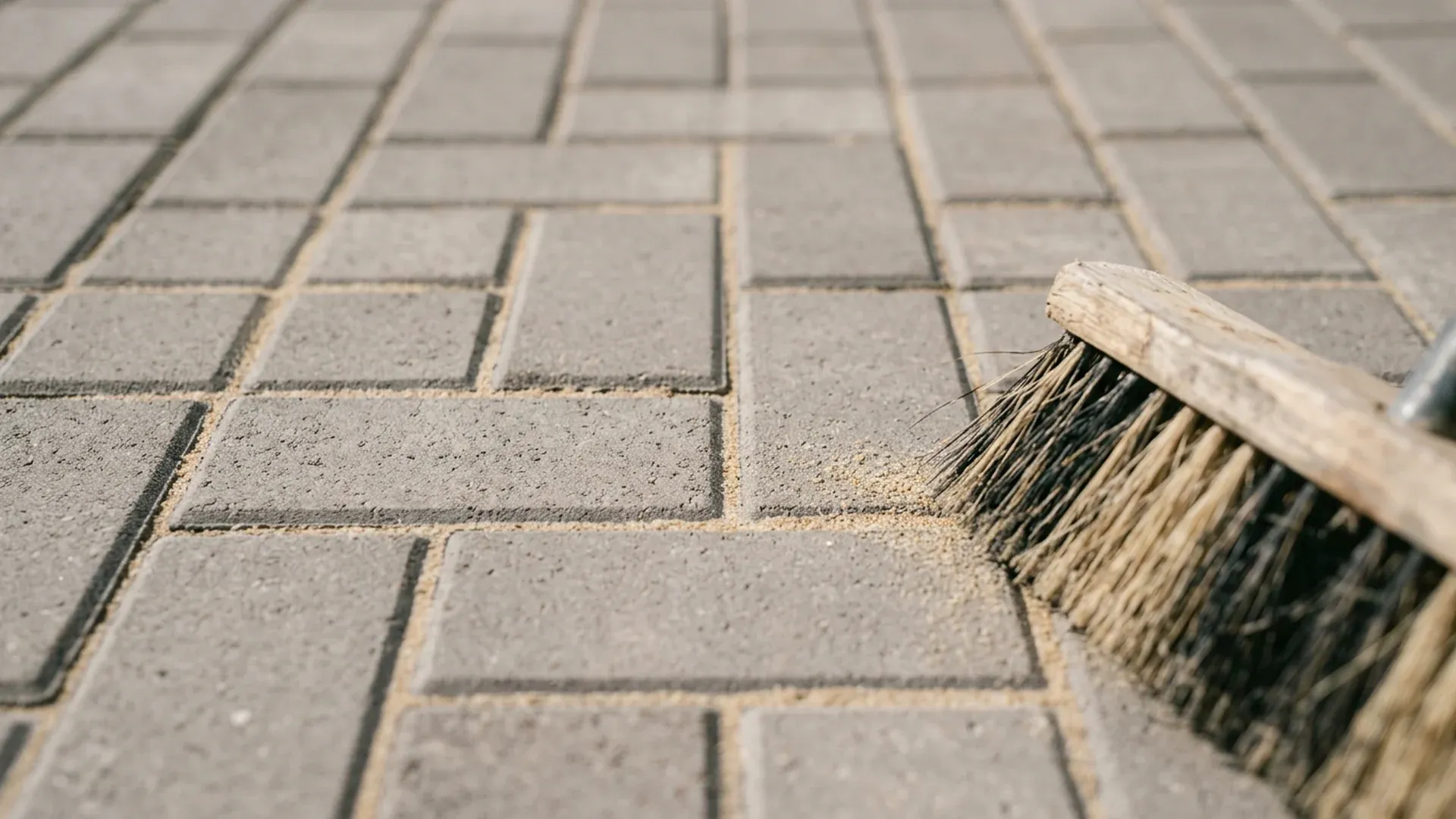
Sealer locks in whatever is on the surface, so cleaning comes before sealing pavers. CMHA says all dirt, oil stains and efflorescence must be removed before sealing, cracked or broken units replaced and nearby shrubs tied back or covered. It recommends cleaners made for concrete pavers, tested on a small area, and advises against steel-bristle brushes because loose bristles rust and stain. Pressure washing can flush sand from the joints, so refill gaps before you seal. PAV-TEC-006 says to top up with dry masonry sand once joints have dropped by more than half an inch, and it does not recommend polymeric sand for topping up. Joints should be full and compacted before any liquid goes on.
How to Seal Pavers Step by Step
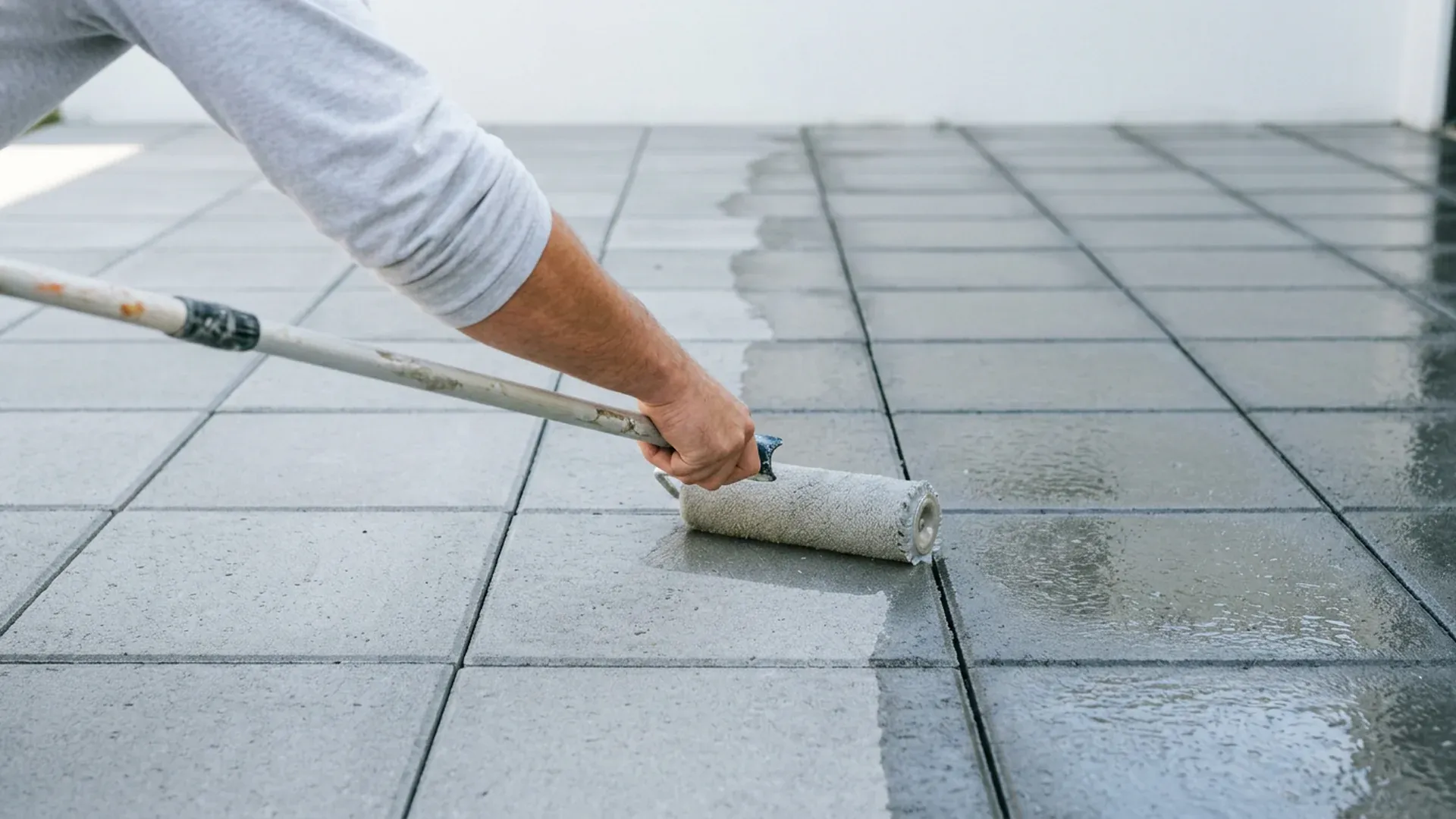
Start with a completely dry surface. CMHA says to allow at least 24 hours without moisture or surface dampness, which in Florida means choosing a stretch between afternoon storms, and to turn off automatic sprinklers during cleaning, sealing and drying. Protect plants and nearby surfaces, and spray only in calm wind. For a small area a hand roller works; a squeegee spreads sealer without pulling sand from the joints, and CMHA says one coat is generally enough. Follow the label for any second coat. Sealer that is applied too thick, over damp sand or over a poorly draining base can turn cloudy. Keep traffic off until the surface is fully dry, which CMHA says is typically 24 hours.
FAQ: Sealing Pavers
Will sealer change the color of my pavers?
Usually yes. CMHA says most sealers darken the surface and enhance color, though some leave only a slight change and a flat finish. A glossy acrylic or urethane gives the strongest wet look, while a penetrating sealer stays closer to natural. Test a small hidden area first and let it dry completely before judging.
Why did my sealer turn white or cloudy?
CMHA ties whitening to moisture: damp surface or joints, a source of efflorescence under the pavers, a sealer that cannot breathe, or a coat applied too thick over a poorly draining base. Fixing it means removing or re-dissolving the sealer, so contact the sealer supplier for guidance before you try anything yourself.
Does sealing pavers stop weeds in the joints?
It helps. CMHA says sealers are useful in stopping unwanted weeds and insects. Its maintenance note adds that weeds sprout from windblown seeds lodged in the joints, not from the base underneath. Sealing makes joints less welcoming, but sweeping debris out of the joints and keeping them full of sand still matters.
Can I seal pavers myself?
On a small patio, yes. CMHA says homeowners can clean and seal small areas by hand, but it advises weighing the extra time against hiring a company with the equipment and chemical experience. Cleaning, joint repair, weather timing and an even application are the steps where mistakes show up.
Request a Free Estimate for Paver Work in Southwest Florida
Sealing pavers works best on a well-built, level surface with full joints. The pavers page at Phenomenal Renovation names driveways, pool decks, patios and walkways, plus a checklist that includes base prep, joint setting, edge restraints and "sealing options," and it presents the company as licensed and insured. The page does not say which sealer products are used, so ask about type, finish and reapplication before you decide. To request a free estimate, call (239) 878-3404 or visit the pavers service page. The site also has service area pages for Fort Myers, Cape Coral, Naples, Bonita Springs, Estero and LaBelle.
Sources reviewed in October 2026: CMHA Tech Notes PAV-TEC-005 and PAV-TEC-006.
Cristiano Barbosa is the Founder & CEO of Phenomenal Renovation, a family-owned remodeling company serving Fort Myers, Cape Coral, Naples, Bonita Springs, Estero, and LaBelle. With over 20 years of hands-on experience and two generations of construction knowledge behind him, he holds both a Certified Residential Contractor (CRC) license and a Licensed Plumber license, letting his crew handle plumbing and waterproofing in-house instead of outsourcing it, and has led his team through more than 350 successful renovations across Southwest Florida.