Pool Deck Pavers in Florida: Best Materials and Design Ideas
Choose pool deck pavers for a Southwest Florida backyard: materials, barefoot heat, slip resistance, drainage, patterns and upkeep. Call (239) 878-3404.
Pool Deck Pavers: What Matters Most Around a Florida Pool
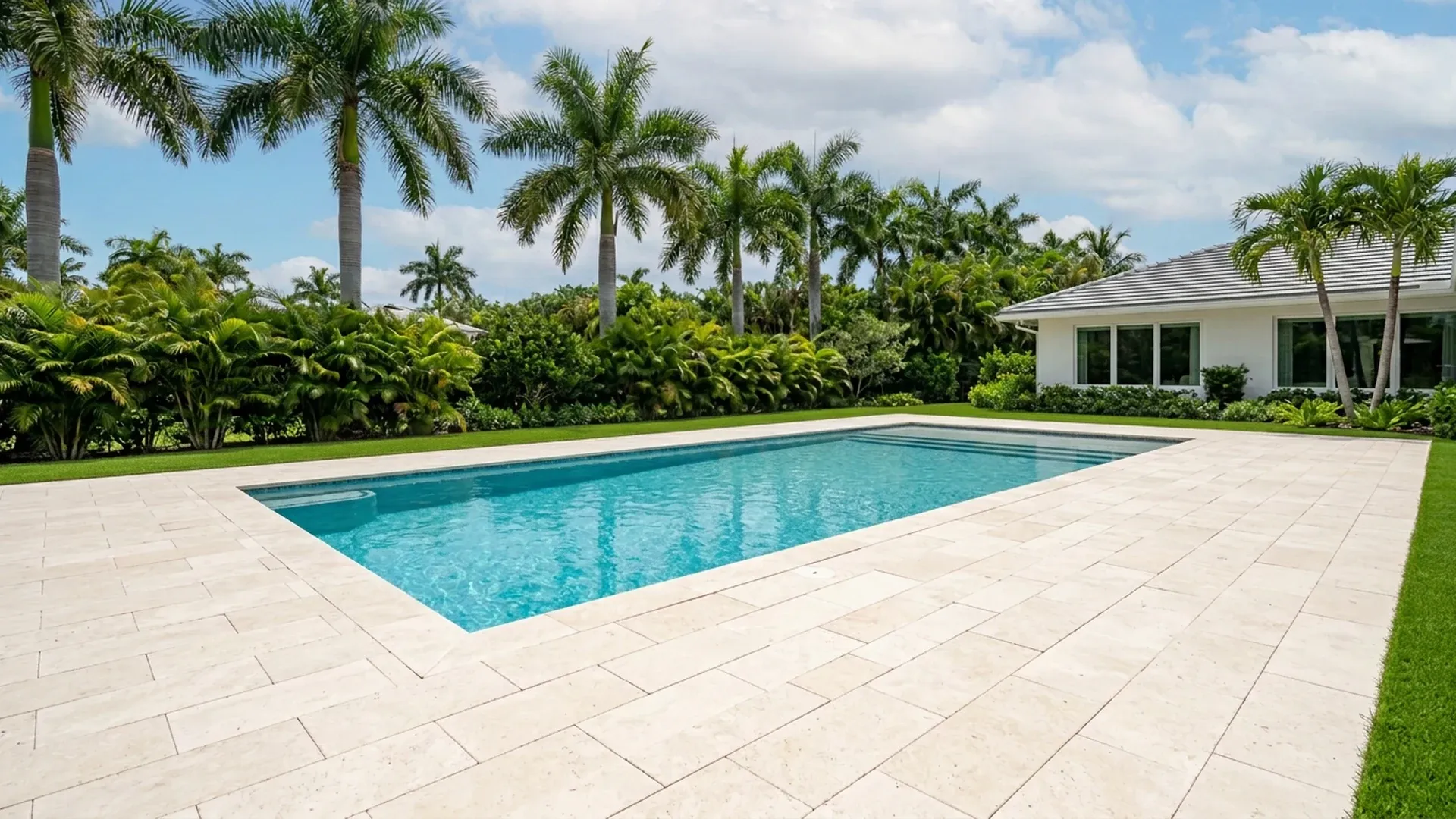
Pool deck pavers form a modular outdoor surface set over a compacted base and bedding layer around a swimming pool, giving bare feet a textured, well-drained walking area that is easier to service section by section than a single poured slab. In Southwest Florida, where pool decks sit under strong sun, summer downpours and screened lanais for most of the year, four details decide whether a deck feels comfortable and stays level: surface heat underfoot, wet traction, water movement away from the house and pool shell, and joint stability. This guide focuses on selecting materials and layouts for the pool area; for driveways, patios and the full installation scope, start with our guide to paver installation in Southwest Florida.
How Do Travertine Pool Deck Pavers and Concrete Pavers Compare?
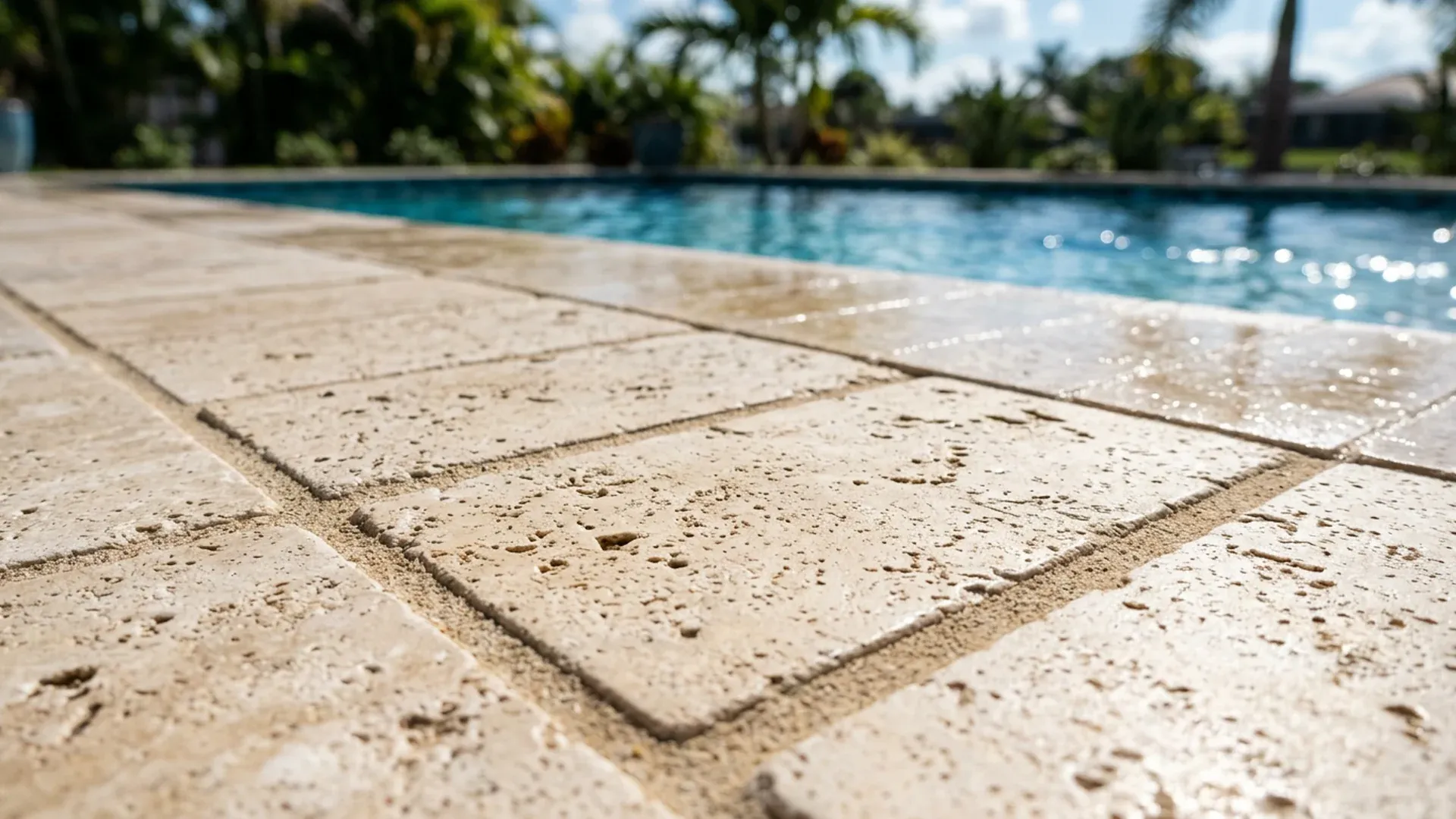
Homeowners shopping for a pool deck in Fort Myers, Cape Coral and Naples usually look at tumbled natural stone, such as travertine pool deck pavers, alongside architectural concrete units. The Concrete Masonry and Hardscapes Association's PAV-TEC-010 application guide lists pool decks among standard applications for interlocking concrete pavements and notes that units conforming to ASTM C936 have a minimum thickness of 2 3/8 inches for pedestrian and residential areas, with factory-controlled vibration and pressure producing dense concrete in varied colors and textures. Natural travertine brings organic pores, soft ivory and shell tones, and slab-to-slab variation that fits coastal lanais, while concrete pavers offer uniform sizing, molded textures and integral color blends. Because a full stone-versus-concrete-versus-brick breakdown is a separate topic, weigh your pool deck choice by how the sample feels in direct sun and when wet.
What Keeps Pool Deck Pavers Cooler Under Bare Feet?
Surface temperature on a July afternoon depends heavily on color, shade and exposure, not only on the product name printed on the sample board. Darker grays, charcoals and deep reds absorb more solar energy than cream, ivory, buff or pale shell tones, whether the paver is natural stone or concrete. Before ordering, take two or three full-size samples home and set them beside the pool in the sunniest spot for an afternoon, then test them with bare hands and bare feet. Notice where the pool cage, roof overhang or palms cast shade during the hours your family actually swims. Lighter colors also bounce soft daylight under a lanai roof without making the water look dark, and pairing a light field with a slightly deeper border gives visual contrast where people rarely stand barefoot.
What Should You Know About Slip Resistant Pool Deck Pavers?
Shopping for slip resistant pool deck pavers means looking at surface texture, slope and upkeep together rather than expecting any outdoor paving to make slips impossible. The Concrete Masonry and Hardscapes Association's PAV-TEC-013 bulletin on slip and skid resistance explains that pedestrian traction depends on many variables at once, including surface texture, wetness, contamination, footwear, walking speed and whether the path is flat or inclined. For wet areas around a pool, favor tumbled, shot-blasted or softly textured surfaces over polished or glossy finishes, and check how the sample feels when wet with pool water. Small chamfers and consistent joints help water leave the top of the unit instead of sitting in a slick film, while regular rinsing keeps sunscreen residue, algae and leaf tannin from making a textured deck slippery.
How Does Pool Deck Paver Drainage Protect the Deck and Yard?
Good pool deck paver drainage keeps splash water and heavy summer rain moving away from the house wall, the screen enclosure footing and the pool beam. When water sits on the surface or washes through an unretained edge, bedding sand can migrate and leave low spots near steps or skimmer lids. Plan a gentle, consistent slope toward deck drains, turf strips or a perimeter drainage channel, and make sure downspouts from the roof or cage gutter do not dump concentrated water across the pavers. Ask the installer how the compacted base, bedding sand, edge restraints and linear channel drains will work together around your pool layout. If an older deck already has low spots, rocking units or washouts beside a drain, read our step-by-step guide on sinking pavers repair to see how a crew lifts, re-grades and relays the affected area.
Which Pool Deck Paver Patterns and Coping Details Work Best?
Choosing pool deck paver patterns is partly visual and partly practical, because pattern and border lines guide the eye around curves, steps and lounge zones. Use these layout checks when reviewing a pool deck design:
- Running bond or modular Ashlar layouts calm a busy lanai and minimize diagonal cuts along straight screen walls
- A 45-degree or 90-degree herringbone pattern adds movement and interlock on wide open sun decks
- A contrasting soldier-course border frames the pool coping and defines dining or grill areas
- Bullnose or straight-edge coping units should sit level and follow a clean line along the waterline tile
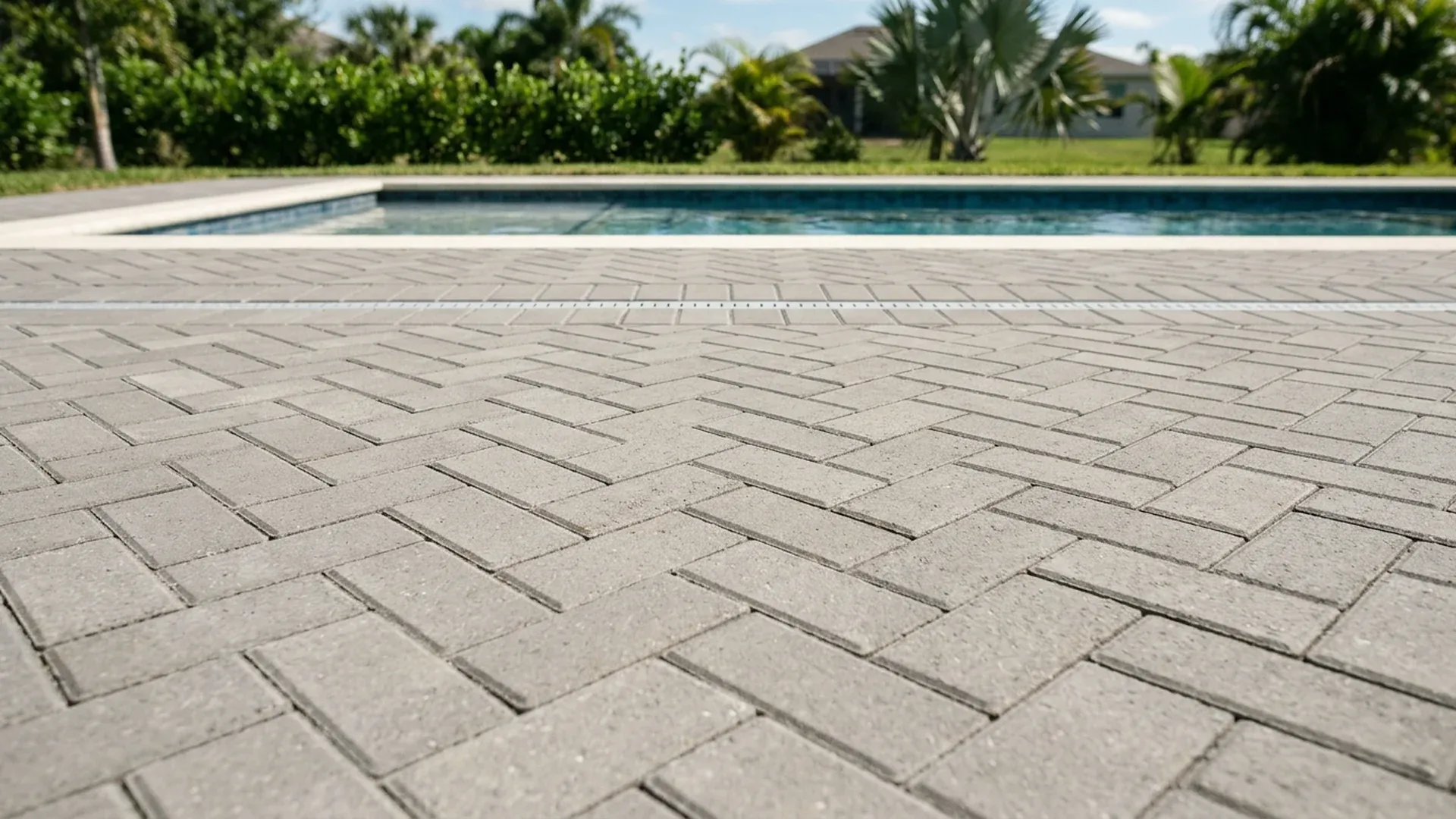
Ask to see how the pattern meets skimmer boxes, return access covers and cage posts so narrow wedge cuts are avoided.
How Do Joint Sand and Sealing Pool Deck Pavers Work?
Joint sand and optional sealer finish the system, so treat them as maintenance choices rather than an afterthought. Well-filled joints help neighboring units share foot loads and discourage weeds and ants from colonizing the gaps. When considering sealing pool deck pavers, ask the supplier whether your specific stone or concrete unit benefits from a breathable penetrating sealer or a color-enhancing product, and whether any topical film would reduce wet traction around the water. Never seal a new deck before the manufacturer's recommended waiting period, and never trap moisture or white efflorescence under a coating. Routine care stays simple: sweep debris off the deck, rinse pool chemicals and spills with clean water, top up joints that wash low after storms, and check perimeter edges each season so the surface stays tight and even.
Pool Deck Pavers FAQ
Are travertine or concrete pavers better around a Florida pool?
Both work well when installed on a properly compacted base with good drainage. Travertine offers natural stone variation and light coastal tones, while interlocking concrete pavers offer consistent sizing and a wide range of colors and textures. Compare wet traction and sun-warmed samples side by side before choosing.
Should you seal a new pool deck right away or wait?
Not always. Some homeowners leave travertine or concrete unsealed for natural texture, while others seal for stain protection or richer color. Check the paver and sealer manufacturer instructions for curing and surface dryness first, and make sure any sealer is rated for wet barefoot areas.
Why do pavers around a pool drain or cage edge sink?
Sinking near a drain, gutter outlet or screen enclosure beam usually comes from water washing out bedding sand, an uncompacted base or a missing edge restraint. Fixing the drainage path and lifting and relaying the affected units over rebuilt base material resolves the root cause.
Can new pavers go into a screened lanai around an existing pool?
Yes, provided the crew checks door thresholds, deck drain heights, coping levels and screen cage footings before setting grades. A walk-through on site confirms whether the layout calls for standard-thickness units over a compacted base or a different remodeling approach for an existing slab.
Plan Your Pool Deck Pavers Project in Southwest Florida
Planning pool deck pavers is easiest when you review material samples, drainage slopes, coping edges and border patterns right by the water. Phenomenal Renovation lists pool deck pavers, paver driveways, patios and walkways, base prep and grading, sand and joint setting, edge restraints and sealing options on its paver installation service page, serving homeowners in Fort Myers, Cape Coral, Naples, Bonita Springs, Estero and LaBelle. Call (239) 878-3404 for a free estimate and plan your backyard deck with our team.
Technical guidance checked against the Concrete Masonry and Hardscapes Association sources in October 2026.
Cristiano Barbosa is the Founder & CEO of Phenomenal Renovation, a family-owned remodeling company serving Fort Myers, Cape Coral, Naples, Bonita Springs, Estero, and LaBelle. With over 20 years of hands-on experience and two generations of construction knowledge behind him, he holds both a Certified Residential Contractor (CRC) license and a Licensed Plumber license, letting his crew handle plumbing and waterproofing in-house instead of outsourcing it, and has led his team through more than 350 successful renovations across Southwest Florida.