Sinking or Uneven Pavers: Causes and How to Repair Them
Sinking pavers repair explained: why pavers settle, how lift and relay works, what you can fix yourself and when to call a Southwest Florida pro.
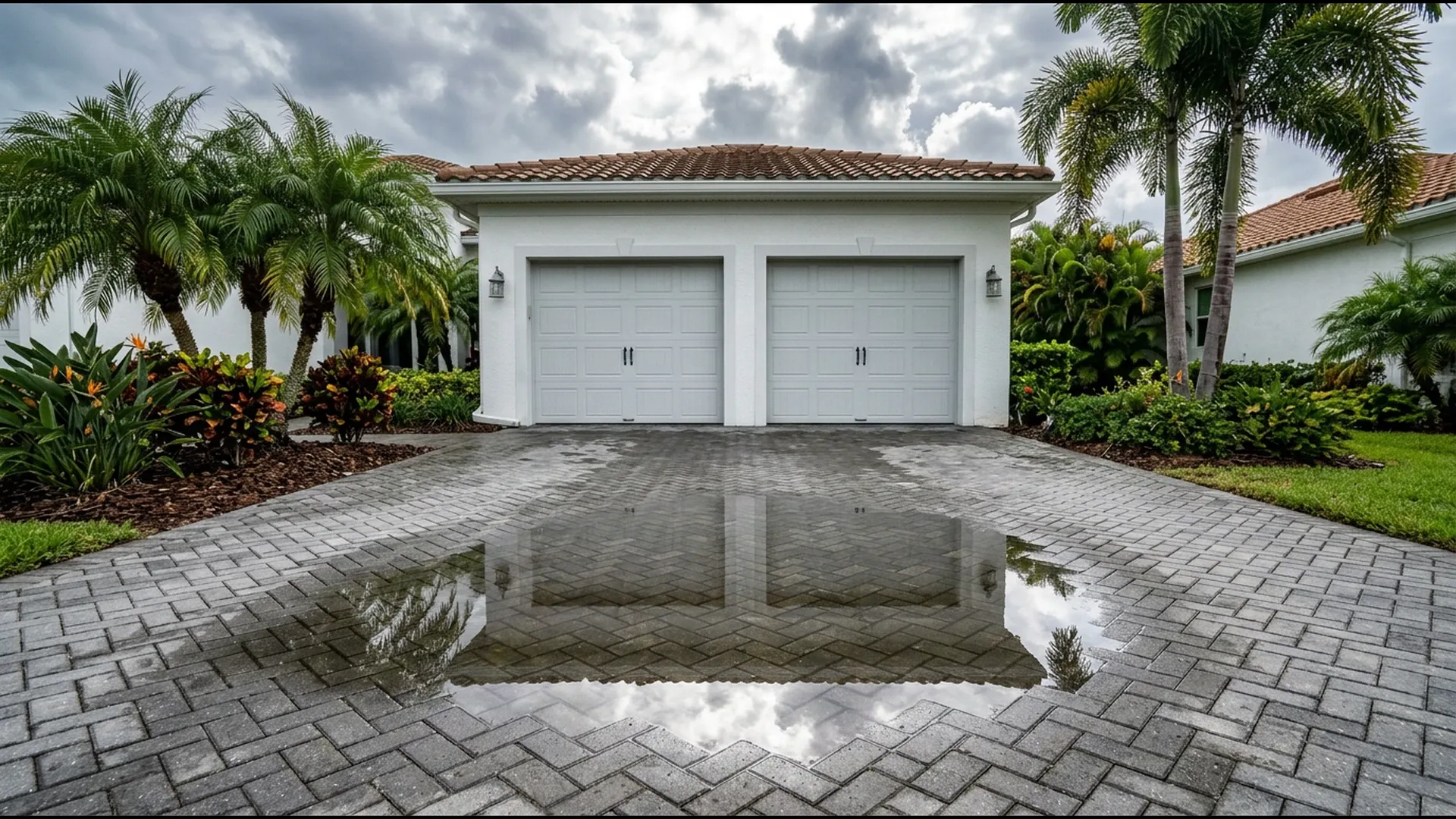
Sinking pavers repair starts with one question: why did the surface drop? Pavers sink when the base, the bedding sand or the soil underneath them moves, so the real fix is to correct that layer, not just to prop up the stones. The good news is that interlocking pavers can be lifted and set back down, which means most settled areas are repaired without ugly patches. This guide covers the causes we see across Southwest Florida, how a lift and relay repair works, what you can safely try yourself and when to call a pro. It builds on our full guide to paver installation in Southwest Florida.
Sinking Pavers Repair: What It Is and When You Need It
Sinking pavers repair means removing the settled stones, fixing the base or bedding layer below and laying the same pavers back at the right height. The Concrete Masonry & Hardscapes Association (CMHA) describes a depression as an area lower than the pavement around it, caused by settlement of the soil or gravel base underneath. You likely need repair when you see puddles after rain, feel a dip underfoot or notice stones standing higher than their neighbors. A low spot collects water, and water softens the base further, so the dip tends to grow. Small, early settlement is the easiest to correct, so treat any new dip as a reason to look closer.
Why Do Pavers Sink? The Most Common Causes
Pavers sink because something below them moved. CMHA's Peak Performance from Concrete Pavers names the usual causes of paver settlement:
- Soil or base that was not compacted enough during installation
- Water sitting in the base or the soil
- Bedding sand laid too thick, or bedding and joint sand that washed out
- Loose or inadequate edge restraints that let pavers move apart
CMHA also notes that settlement is common on utility cut patches. Southwest Florida adds its own pressure. Our installation guide points out that paving over poorly compacted sand or ignoring the drainage slope leads to sunken pavers and puddling, and that sandy soil and soil settling stress poured concrete, while pavers flex with the ground. Summer downpours then test every weak spot, which is why sinking pavers repair so often follows the rainy season.
Sinking vs. Heaving: How to Read the Damage
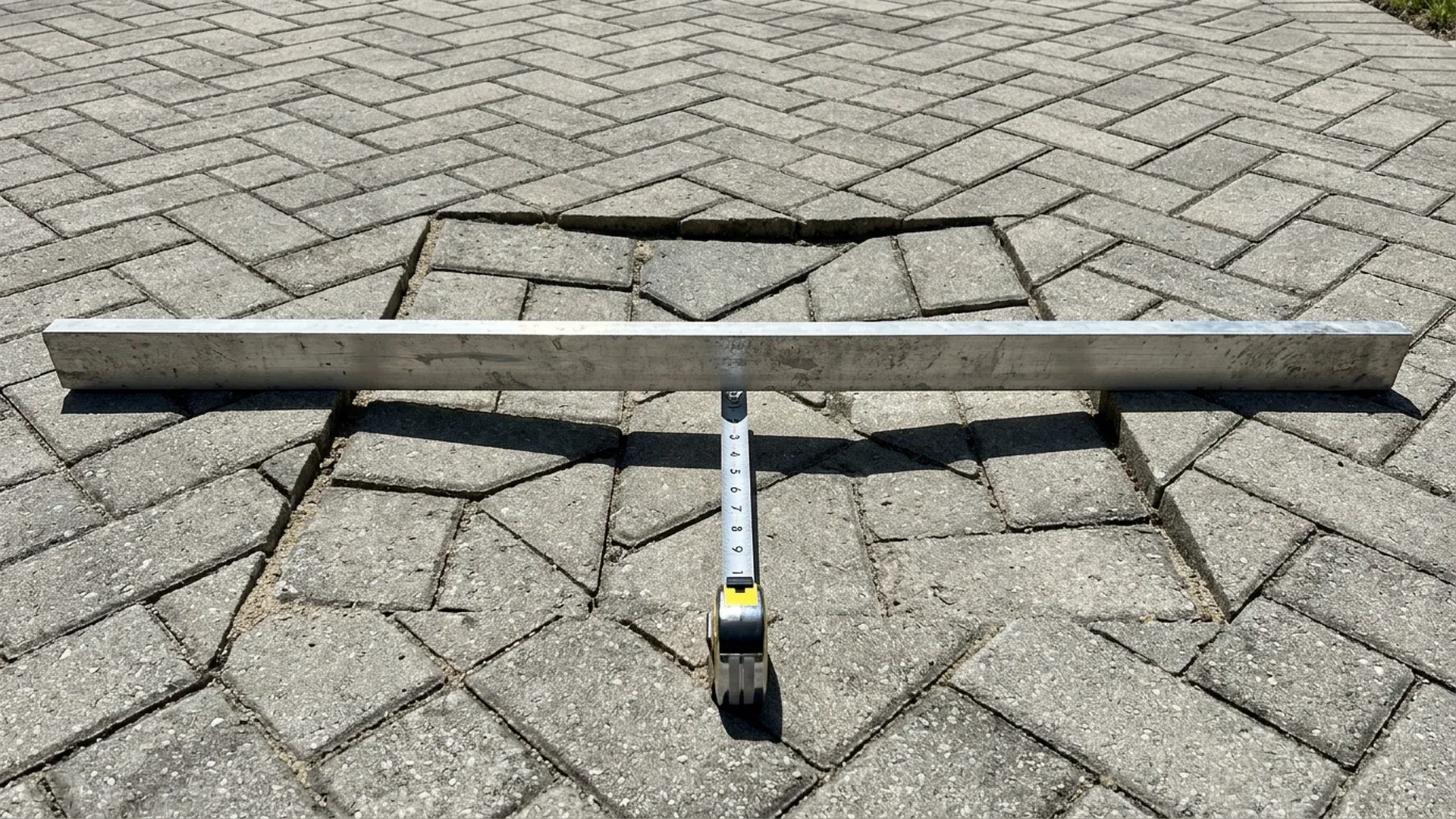
Before you plan sinking pavers repair, confirm what kind of movement you have, because sinking and heaving need different fixes. CMHA's maintenance guide says to measure a depression by laying a straight edge across it and measuring down to the surface. It warns that shadows, color changes and the chamfered paver edges can exaggerate how deep a dip looks, and that standing water helps you spot the low area.
Use this quick read:
- A dip with puddles after rain points to settlement of the base or bedding sand.
- Stones standing proud of their neighbors can be faulting, which is sometimes fixed by resetting them.
- Two parallel dips in a driveway wheel path suggest rutting from a base that is too thin or weak.
Uneven Pavers From Drainage and Tree Roots
Uneven pavers usually trace back to water or roots, so a repair that ignores both will fail again. CMHA lists run-on from adjacent vegetated areas among the problems that heavy rain makes visible, and its guide recommends inspecting twice a year: in spring during or right after a rain, and again in late summer or early fall. Walk the area and look at where downspouts, irrigation heads and neighboring lawns send water. Our paver installation standards call for a one to two percent slope away from the foundation, so water leaves the surface instead of soaking the base. If a tree root is lifting stones, resetting them will not hold, so have the root addressed first.
How to Lift and Relay Pavers, Step by Step
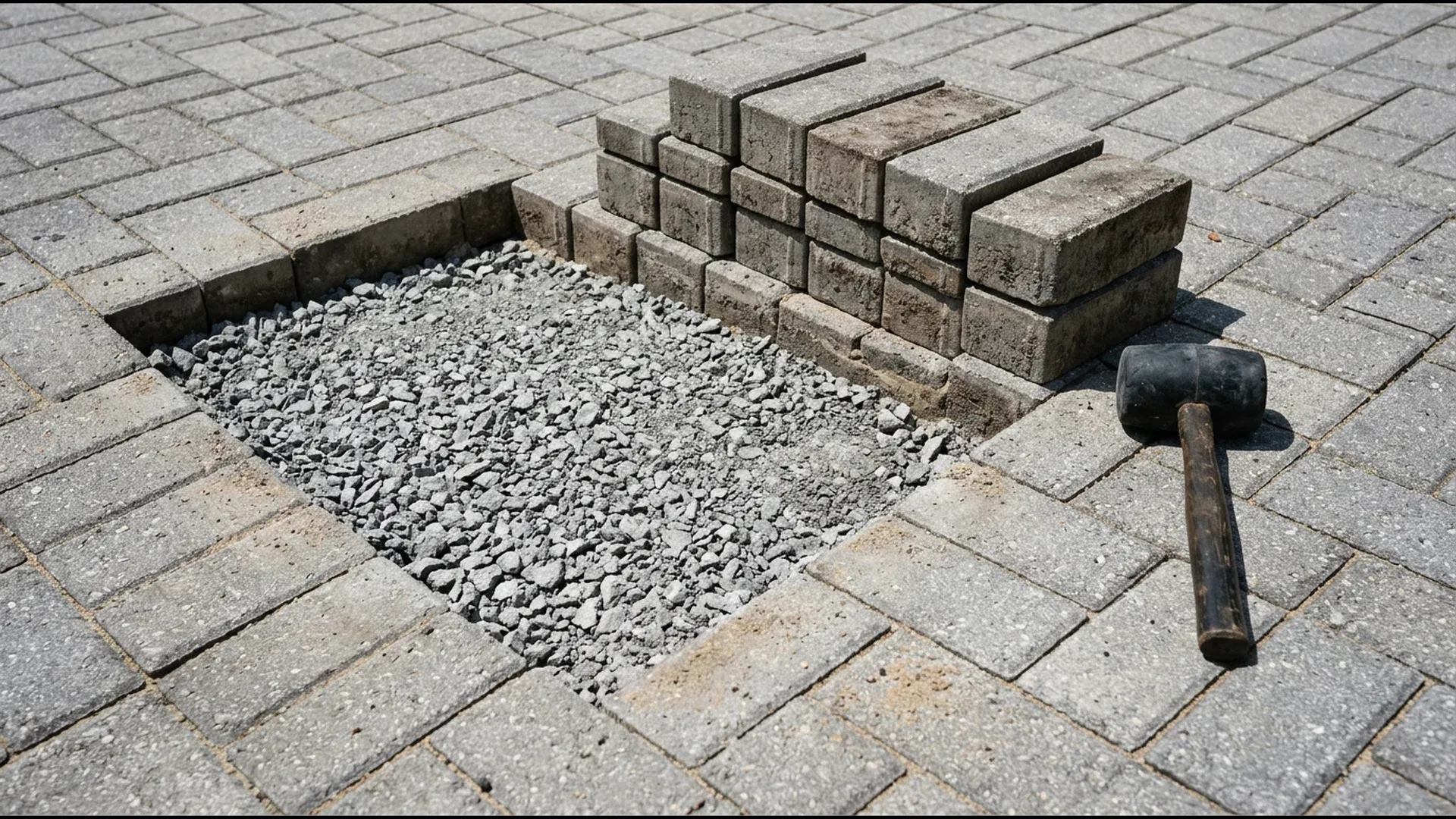
Sinking pavers repair by lift and relay reuses your existing pavers, so the color and pattern match when the job is done. CMHA and ICPI guidance for settled areas follows this core sequence:
- Remove the pavers, scrape the sand off each one and stack them nearby.
- Remove the bedding sand and find the cause of the settlement in the base.
- Add base material and compact it to the correct level.
- Spread and screed fresh bedding sand to an even thickness.
- Relay the pavers in the original pattern and compact them with a plate compactor.
- Sweep in dry joint sand and compact again until the joints are full.
CMHA's Peak Performance guide says this way the pavers are reinstated with no wasted material or unsightly patches. ICPI Tech Spec 6 adds that low spots belong to the base: do not use bedding sand to make up for them.
How to Fix Sunken Pavers Yourself, and When to Call a Pro
You can often handle a small, shallow low spot yourself if the base underneath is stable. Pull the pavers, correct the base, re-screed the sand and reset the stones with a rented plate compactor. Keep two cautions in mind. First, digging has rules: Florida Statute 556.105 requires excavators to notify through the state system at least 2 full business days before excavation, while section 556.108 exempts a homeowner digging on their own single-family lot to a depth of 10 inches or less, with due care. Sunshine 811 (sunshine811.com) advises calling 811 before every dig, large or small, so calling first is the safe habit if the dig is deeper or you are unsure. Second, a big or fast-growing dip, a driveway rut or any area that keeps filling with water points to a deeper base or drainage problem. Those jobs need proper compaction equipment and experience, so call a professional.
Repair or Rebuild? What Changes the Scope
Whether sinking pavers repair means a relay or a rebuild depends on how deep the problem goes. CMHA explains that repair may not require removing the whole pavement, and that depending on the distress you may only need to remove the top layers. Minor rutting often comes from excess fines in the bedding sand and poor drainage, while major rutting often means the base is too thin or too weak and must be repaired or replaced. Several things shape the work and the estimate: the area affected, how far down the base failed, access for equipment, drainage corrections and whether pavers are damaged. Ask for a written scope that names each step, instead of a quote for a quick top-up of sand.
How to Keep Repaired Pavers From Sinking Again
A sinking pavers repair lasts when the cause is fixed, and a few habits protect it. Keep the paver edge restraint tight, because CMHA calls lateral restraint essential for stopping pavers from moving and for keeping bedding and joint sand in place. Refill joint sand when it thins; our installation guide suggests replenishing it every two to three years, and polymeric sand resists washout from tropical downpours. Send downspouts away from the paved area. Then follow CMHA's twice-yearly inspection, once in spring and once in late summer or early fall, so a small dip is caught while it is still easy to correct.
FAQ: Sinking Pavers Repair
Why are my pavers sinking in just one spot?
A single low spot usually means the base or soil under that spot settled. Common causes include poor compaction, water in the base, washed out bedding sand or a loose edge. Check nearby drainage and roots too. Fixing only the surface will not last unless the layer underneath is corrected.
Can sunken pavers be reused?
Yes. Interlocking pavers can be lifted, the base and bedding sand corrected, and the same stones relaid in their original pattern. CMHA says reinstating them leaves no wasted material or unsightly patches. New pavers are only needed where individual stones are cracked, stained or missing.
Can I just pour sand on top of sunken pavers?
Adding sand over a dip is a short-term cover-up. ICPI guidance says low spots belong to the base, not the bedding sand. A thick sand layer can itself cause settlement, and the underlying cause stays in place. Lift the pavers and correct the base for a repair that lasts.
How often should I inspect my pavers?
CMHA recommends inspecting twice a year: in spring, during or right after a rain, and again in late summer or early fall. Rain on the surface reveals ponding, settlement and rutting. Mark any dip with chalk and watch it. If it grows, schedule a repair before it spreads.
Ready to Plan Your Sinking Pavers Repair?
Ready to plan your sinking pavers repair? Phenomenal Renovation is a licensed and insured Florida contractor that installs pavers for driveways, pool decks, patios and walkways on a properly prepped base, serving Fort Myers, Cape Coral, Naples, Bonita Springs, Estero and LaBelle. Call (239) 878-3404 to talk about a paver installation for your driveway, patio or walkway. You can also read about our paver installation service or see our Fort Myers service area.
Cristiano Barbosa is the Founder & CEO of Phenomenal Renovation, a family-owned remodeling company serving Fort Myers, Cape Coral, Naples, Bonita Springs, Estero, and LaBelle. With over 20 years of hands-on experience and two generations of construction knowledge behind him, he holds both a Certified Residential Contractor (CRC) license and a Licensed Plumber license, letting his crew handle plumbing and waterproofing in-house instead of outsourcing it, and has led his team through more than 350 successful renovations across Southwest Florida.