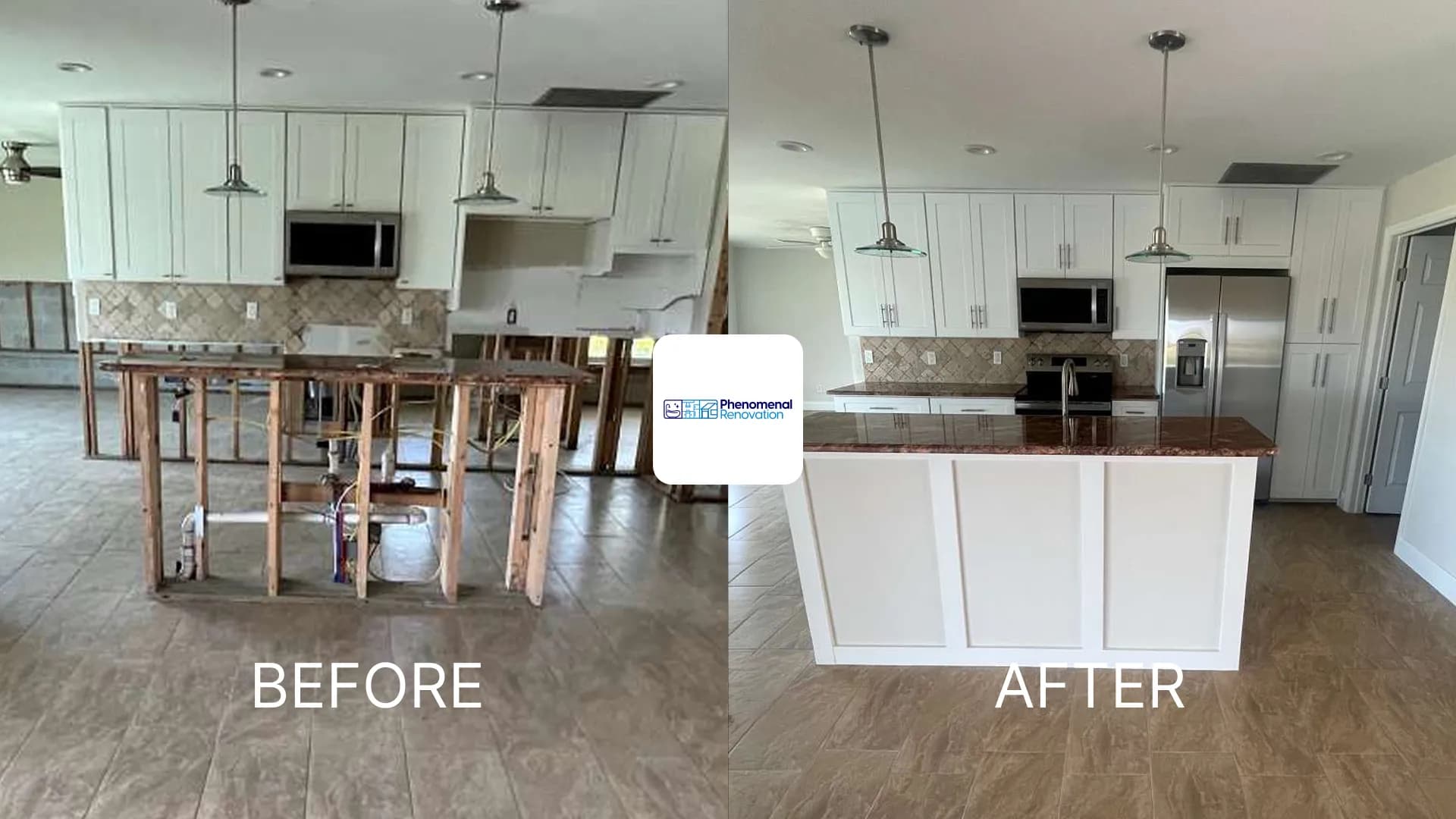
Mold on Drywall: Signs, Causes and When to Replace
Mold on drywall in Southwest Florida: signs, causes, when to replace the board and when to call a mold specialist. Free estimate: (239) 878-3404.
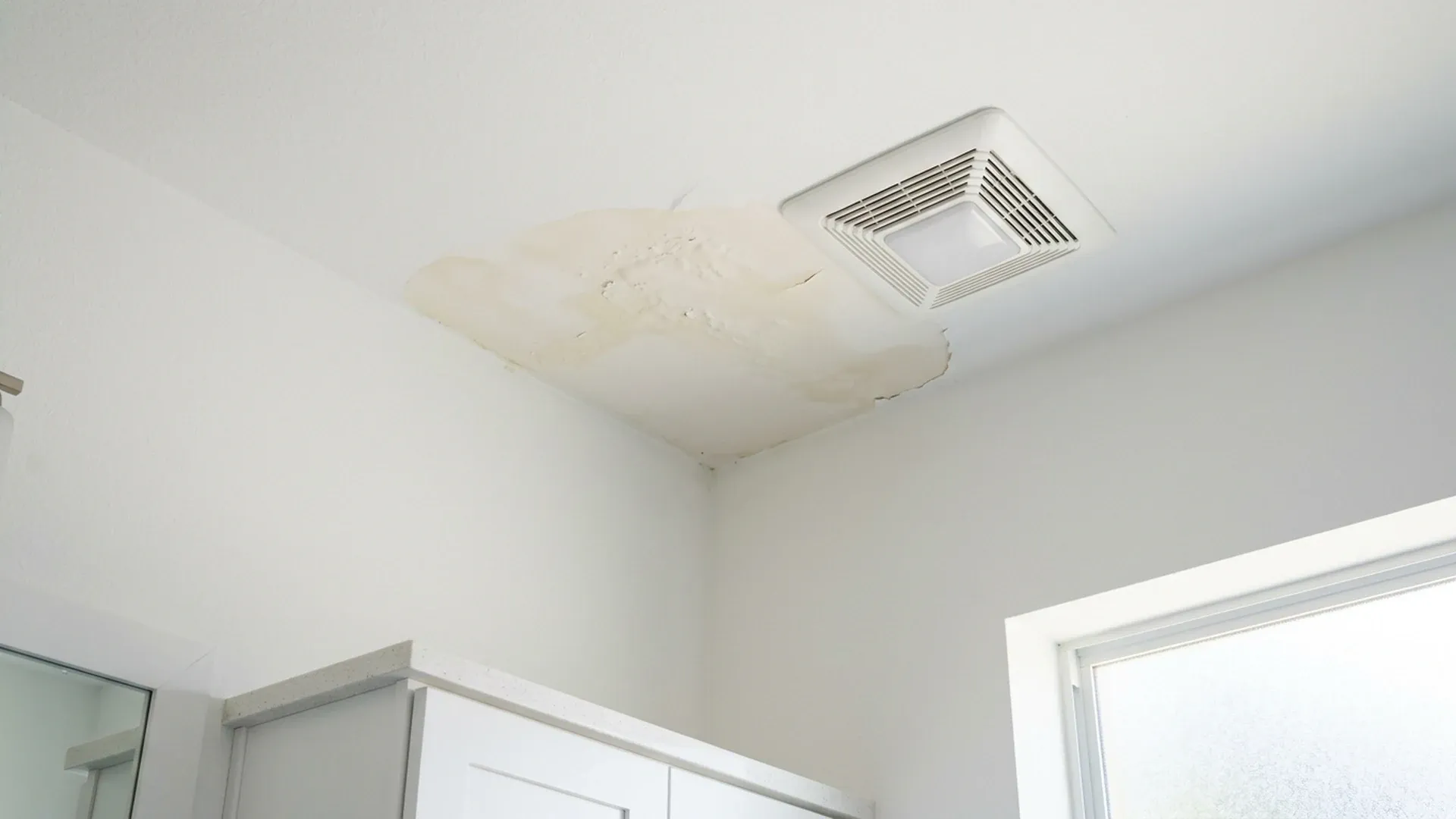
Mold on drywall is fungal growth that starts when the paper face of the board stays damp long enough for airborne spores to settle and feed. In Southwest Florida that dampness can come from a slow leak, a clogged air conditioner drain, a steamy bathroom or humid air trapped inside a wall. This guide explains the signs of mold on drywall, what causes it in our climate, how to tell surface growth from deeper damage, when the board has to be replaced and when to call a mold specialist instead of a drywall pro. For the full range of hanging, repair and finishing work, see our overview of drywall services in Southwest Florida.
Signs of Mold on Drywall: What to Look and Smell For
The most reliable signs of mold on drywall are spots, fuzzy patches or stains that keep returning, usually with a musty smell. The CDC says mold can look like spots of many different colors and can smell musty, so a wall does not have to be black to be a problem. Check ceiling corners, the wall behind a toilet or vanity, the area under a window, the strip just above the baseboard and any wall that shares a pipe or an air handler closet. Bubbling or peeling paint, a soft or chalky surface and discoloration that keeps spreading suggest the board behind the paint is wet. The CDC adds that damp, moldy places may cause a stuffy nose, wheezing or irritated eyes in some people and no effects in others.
What Causes Mold on Drywall in Florida Homes?
Drywall is a gypsum core wrapped in paper, and the CDC lists drywall and paper among the materials where mold can grow. EPA's A Brief Guide to Mold, Moisture and Your Home explains that spores are always floating through indoor and outdoor air, that they only begin growing when they land on a wet or damp surface and that no type of mold grows without moisture. That makes water the real cause and the stain on the wall the symptom. Southwest Florida supplies the conditions that make this common: warm air, humid summers, sudden storms and homes that run air conditioning most of the year, which leaves cool surfaces where condensation forms. A wall does not need a flood. A damp spot that never fully dries is enough.
Hidden Moisture Sources and Mold Behind Drywall
Most of the mold that surprises homeowners comes from water they never saw. EPA lists where hidden mold can sit, including the back side of drywall, the inside of walls around leaking or condensing pipes, the surface of walls behind furniture where condensation forms and roof materials above ceilings after a roof leak. Southwest Florida homes add a few usual suspects: an air conditioner drain line or drip pan that is not flowing, a bathroom fan that vents poorly, a window or door that leaks in a storm and a supply or drain line that weeps inside a wall. EPA advises keeping air conditioning drip pans clean and drain lines unobstructed. Trace a stain upward and sideways before blaming the paint; a repeat stain means the source is still active.
Surface Mold or Deeper Growth? How to Check Safely
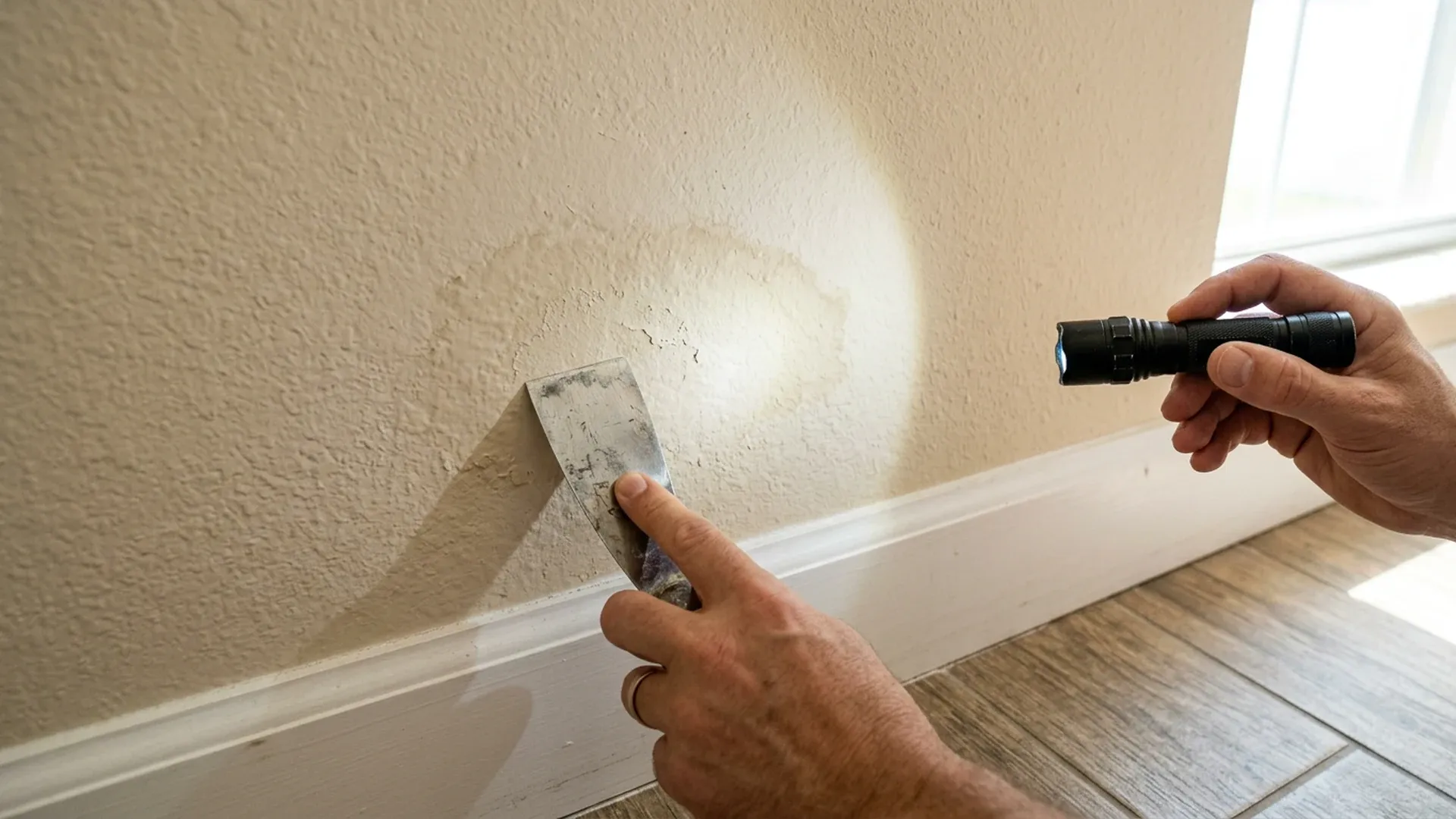
Surface mold sits on the painted face and often follows steam or condensation, while deeper growth lives in the paper backing, the gypsum core or the wall cavity and usually follows a leak. A stained wall with no visible growth can be checked gently. Shine a flashlight across it at a low angle to show bubbles and texture changes, then press lightly with a flat putty knife to feel for a soft, crumbly or damp spot. Stop if anything gives way or the smell gets stronger. EPA warns that disturbing a possible hidden mold site can release spores and that investigating one may be difficult, so a suspected cavity should be opened by someone with experience, not by a homeowner with a utility knife. EPA also says that if you clean mold but leave the water problem, the mold will most likely come back.
Moldy Drywall Replacement: When the Board Has to Go
Drywall is porous, and EPA says porous materials may have to be thrown away once they become moldy, because mold can fill their crevices and be difficult or impossible to remove completely. Plan on replacement when growth has come through the paper face, the board is soft, swollen or crumbling, the stain or smell returns after the leak is fixed or the affected area is large. EPA's water damage table says wallboard may be dried in place if there is no obvious swelling and the seams are intact, but that rule covers wet board where mold growth is not yet apparent. Once growth shows, the safer default is to remove the section. For the broader repair or replace decision on wet board, read our guide to water damaged drywall repair.
Mold Specialist vs Drywall Contractor: Who Handles What?
Treat it as two jobs in order: remove the mold and the moisture, then rebuild the wall. EPA's guide draws the line by size: a moldy patch smaller than roughly 3 feet by 3 feet, about 10 square feet, can often be handled by the homeowner, but a bigger patch or extensive water damage means bringing in experience. It also advises hiring an experienced professional for suspected hidden mold and for damage from sewage or other contaminated water, and says not to run an HVAC system you suspect is contaminated with mold. Phenomenal Renovation's drywall service lists repair, patching, ceiling repair, taping, texture matching and paint-ready finishing, but it does not list mold testing or mold remediation. When mold is widespread or hidden, hire a mold specialist first. Once the area is cleared and the source is fixed, a drywall pro can cut out, replace and finish what the cleanup removed.
How to Keep Mold Off Drywall After the Repair
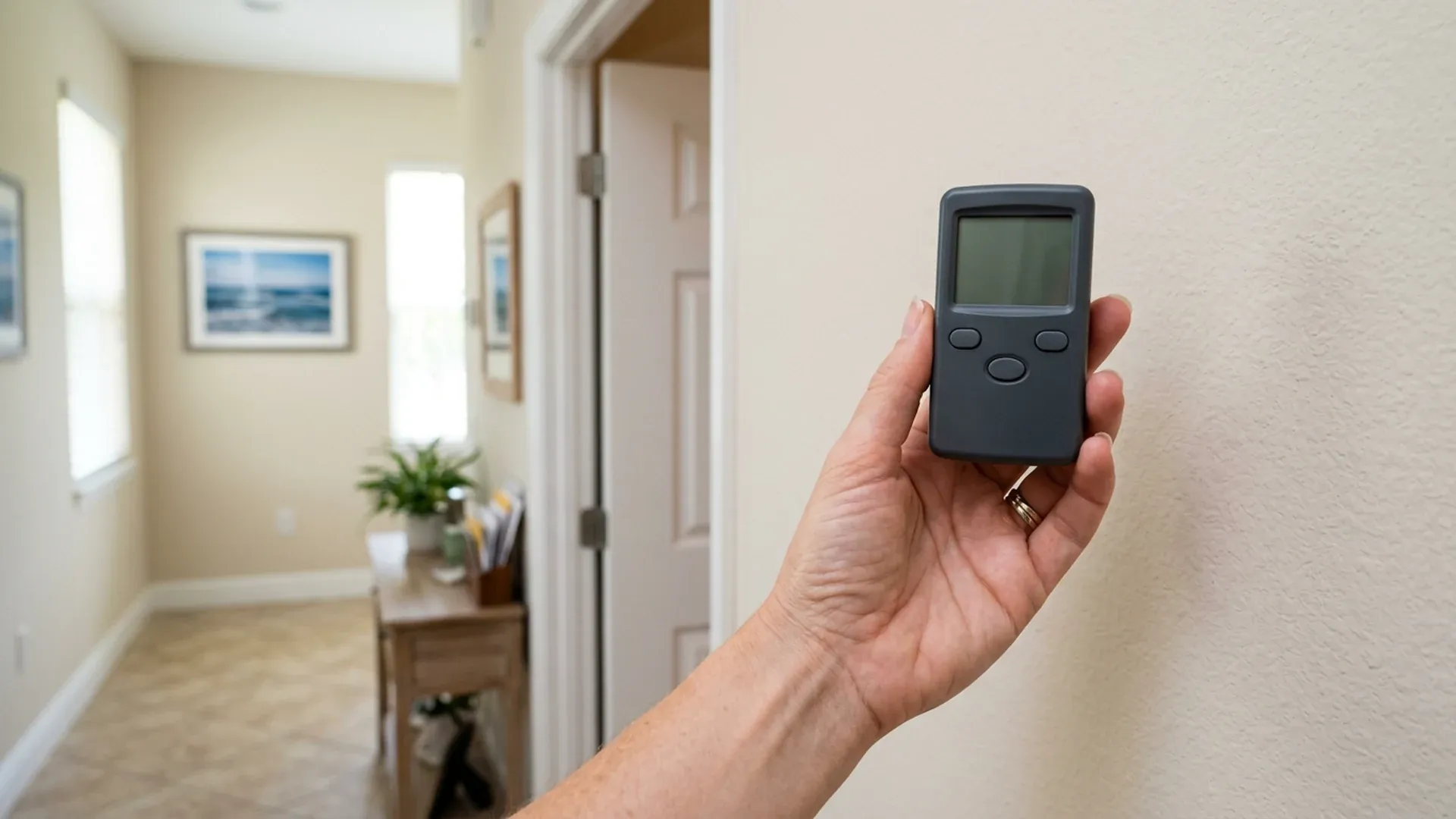
Fix the water first, then keep the wall dry. EPA says moisture control is the key to mold control and that when wet areas are dried within 24 to 48 hours of a leak or spill, mold in most cases will not grow. It recommends keeping indoor humidity below 60 percent, ideally between 30 and 50 percent, and says a small humidity meter can measure it. Run the bathroom fan or open a window when showering, use air conditioning or a dehumidifier when needed and insulate cold pipes where condensation forms. If a bathroom keeps growing mold, ventilation and waterproofing belong in a bathroom remodeling in Southwest Florida conversation. Hold off on paint and caulk until the mold is gone and the surface is dry, since EPA warns that coatings applied to moldy surfaces are likely to peel.
FAQ: Mold on Drywall
Does bleach kill mold on drywall?
EPA does not recommend chlorine bleach or other biocides as routine mold cleanup and says dead mold can still cause allergic reactions, so it must be removed, not just killed. Bleach also leaves the moisture problem alone. If you use any disinfectant, ventilate the area and never mix bleach with products that contain ammonia.
Is mold on drywall dangerous?
It can be. EPA says mold may cause allergic reactions in sensitive people, trigger asthma attacks in people with asthma who are allergic to mold and irritate the eyes, skin, nose, throat and lungs of anyone. The CDC adds that effects vary and may not occur at all. Anyone with health concerns should talk to a health professional before cleanup.
Do I need a mold test before replacing drywall?
Usually not. EPA says that when visible mold growth is present, sampling is generally unnecessary, and that no federal limits have been set for mold or mold spores. Any sampling should be done by professionals with specific experience. A better first step is finding and fixing the moisture source, then choosing between cleanup and replacement.
Does mold on drywall always look black?
No. The CDC says mold can look like spots of many different colors and can smell musty, so color alone is not a reliable test. A musty smell, a stain that keeps returning or bubbling paint over a damp spot deserves attention even when nothing on the wall looks black.
Request a Free Estimate for Drywall Repair in Southwest Florida
Mold on drywall is a moisture problem first and a wall problem second. After the source is fixed and any mold has been handled by the right specialist, Phenomenal Renovation can repair or replace the board. Its drywall page lists water damage repair, patching, ceiling repair, taping, mudding and texture matching for homes in Fort Myers, Cape Coral, Naples, Bonita Springs, Estero and LaBelle, and presents the company as licensed and insured. To book a free estimate, phone (239) 878-3404, review the drywall service page or start from the Fort Myers location page.
Sources reviewed in October 2026: the EPA and CDC mold guidance named above.
Cristiano Barbosa is the Founder & CEO of Phenomenal Renovation, a family-owned remodeling company serving Fort Myers, Cape Coral, Naples, Bonita Springs, Estero, and LaBelle. With over 20 years of hands-on experience and two generations of construction knowledge behind him, he holds both a Certified Residential Contractor (CRC) license and a Licensed Plumber license, letting his crew handle plumbing and waterproofing in-house instead of outsourcing it, and has led his team through more than 350 successful renovations across Southwest Florida.