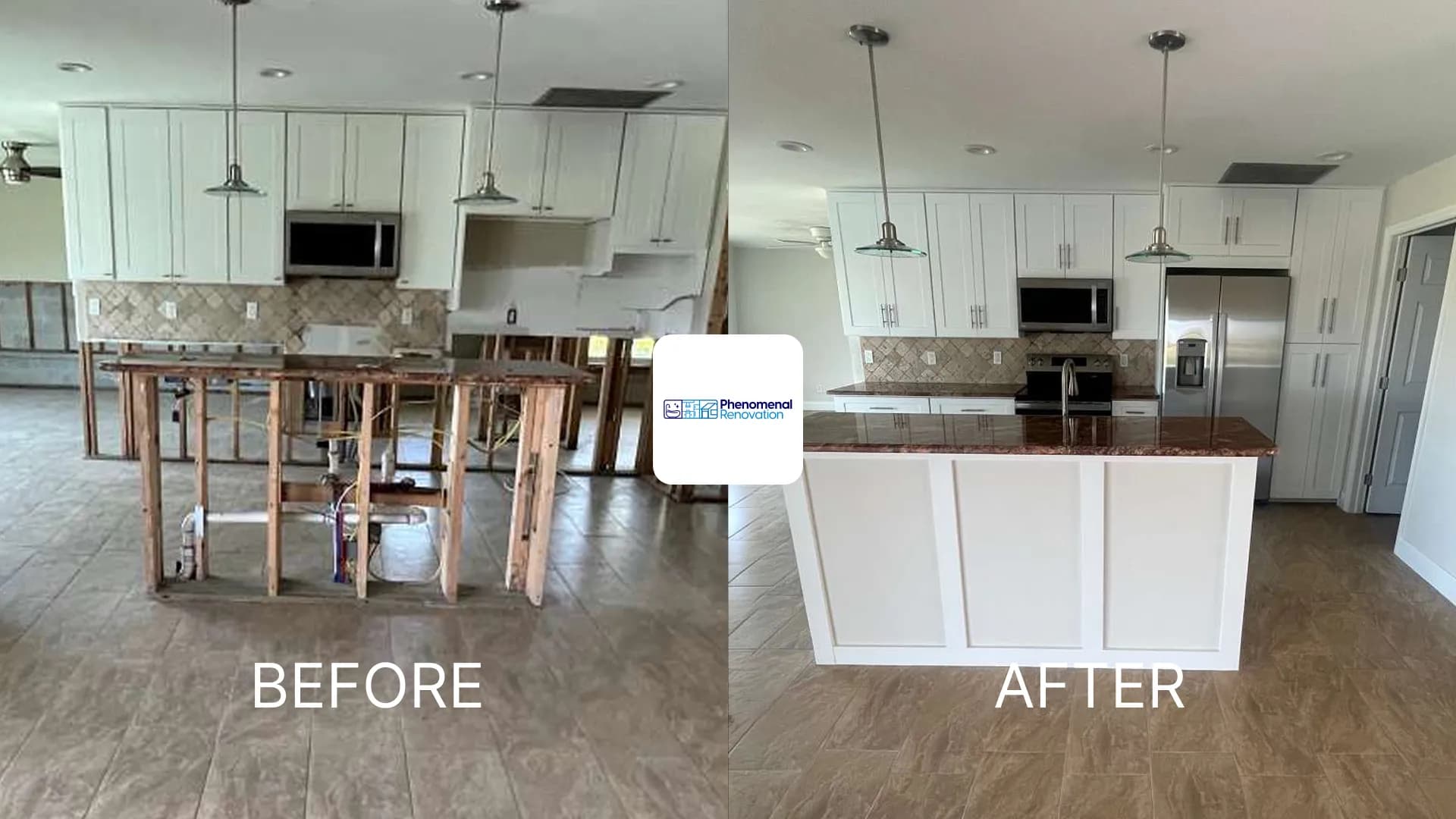
Water-Damaged Drywall: Should You Repair or Replace It?
Water damaged drywall repair in Southwest Florida: signs of damage, the moisture source, drying and when to replace board. Free estimate: (239) 878-3404.
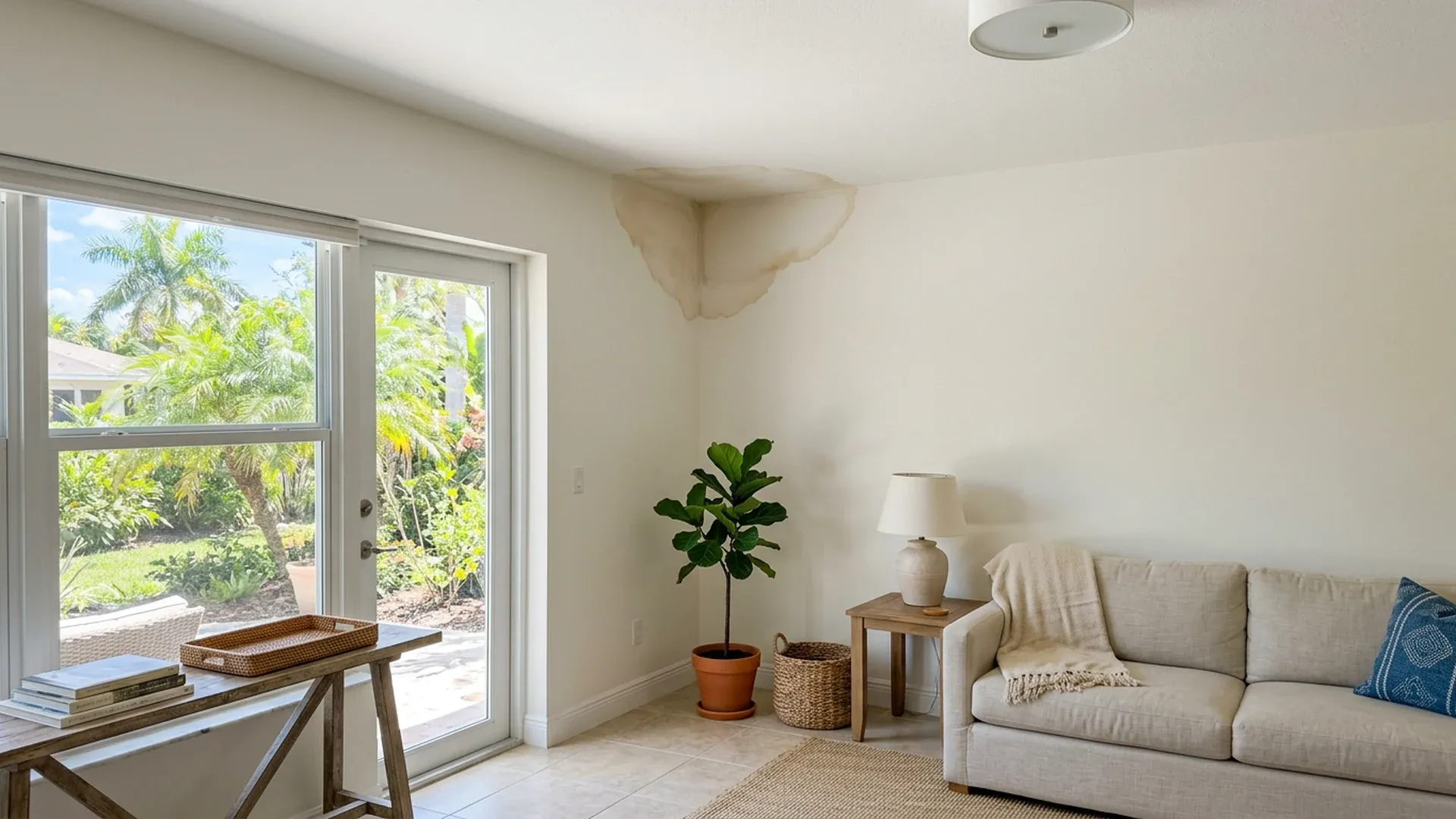
Water damaged drywall repair starts with one decision: can the wall be dried and saved, or does it have to come out? The answer depends on where the water came from, how long the board stayed wet and whether the paper face and core are still sound. In Southwest Florida, where humidity and summer storms keep walls damp, that call matters even more. This guide covers the signs of water damaged drywall, how to find the moisture source, when drywall must be replaced, how drying works and where mold fits in; for new hanging, taping and finishing across the house, read our overview of drywall services in Southwest Florida.
Water Damaged Drywall Repair: Signs the Wall Is Hurt
Knowing the signs of water damaged drywall helps you act before a small stain turns into a larger repair. Yellow, tan or brown stains and rings on a wall or ceiling point to a past or active leak. Bubbling or peeling paint means moisture is pushing out from behind the surface. A wall that feels soft or crumbles under light pressure has lost its strength, and a sagging ceiling panel is a reason to stay out from under it. Swelling at the seams or along the baseboard, a musty smell and rust on screws or nail heads all suggest the board has been wet for a while. The Gypsum Association lists rusting fasteners and paper delamination as damage that can rule out keeping a board. Even a dry stain deserves a check for its cause.
Find the Moisture Source Before You Repair Anything
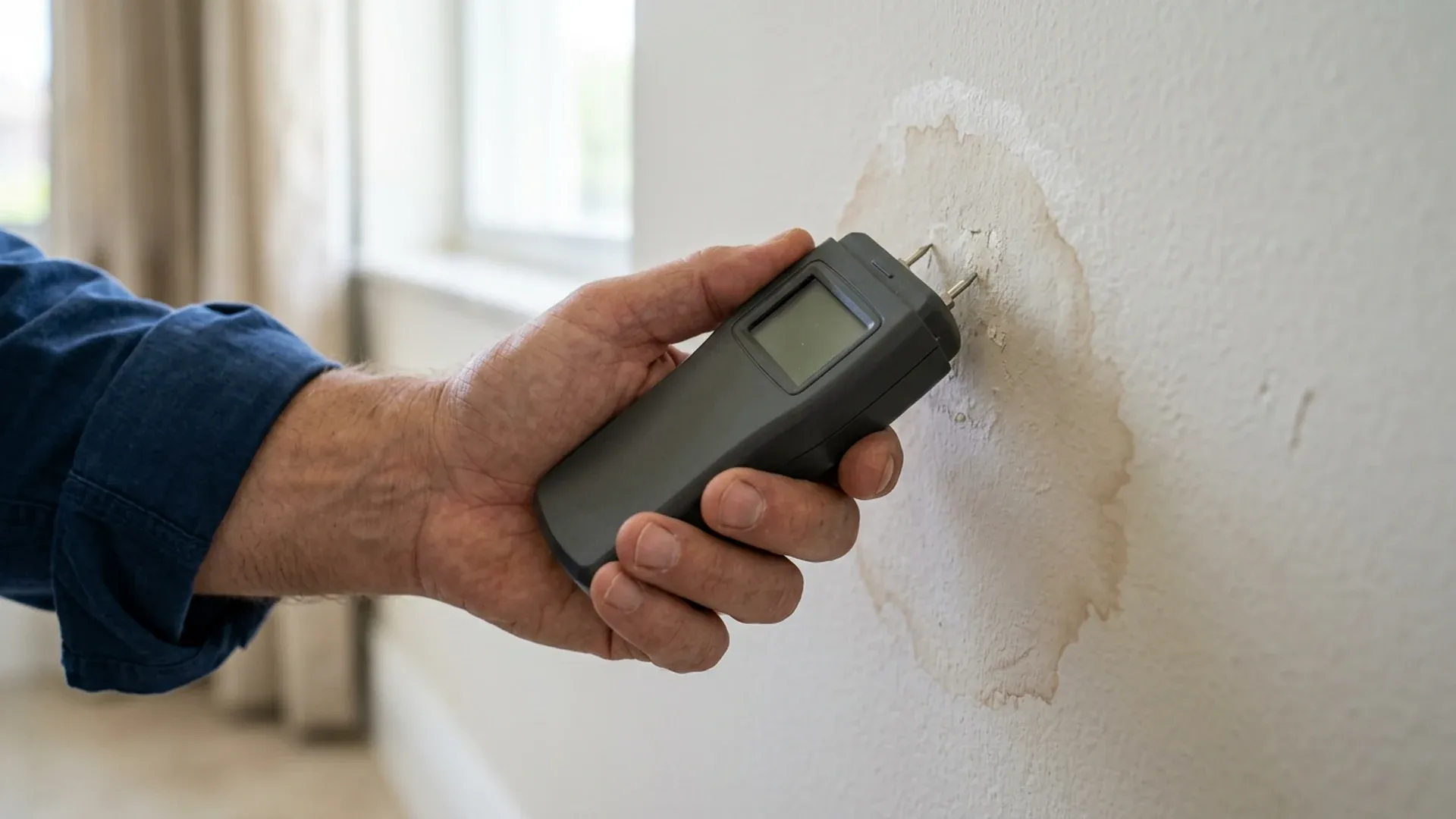
The moisture source comes first, because any water damaged drywall repair will fail if the wall keeps getting wet. EPA's A Brief Guide to Mold, Moisture and Your Home says the key to mold control is moisture control, and that you must fix the water problem, not only clean up. Common sources in Southwest Florida homes include supply or drain leaks, a clogged air conditioner condensate line, a roof or window leak after a storm and steady humidity on a cool wall. Trace the stain to its highest point, check the room above and inspect nearby plumbing and AC equipment. A wet drywall moisture meter can help, but the Gypsum Association's GA-231-2019 guide says meters on gypsum board are best used to tell wetter areas from drier ones, not to give an exact reading. Check a wall you know is dry first, then work toward the stain.
Repair or Replace? When Water Damaged Drywall Can Stay
Deciding whether to repair or replace water damaged drywall comes down to the condition of the board and the water that reached it. Water damaged drywall repair makes sense only when the damage is limited and the board is still sound. The Gypsum Association's GA-231-2019 guide says wet board should be replaced unless every one of these conditions is met:
- The source of the water has been found and stopped
- The water was clean, not sewage or flood water
- The board can be dried thoroughly before mold growth begins, typically 24 to 48 hours depending on conditions
- The board is structurally sound, with no rusting fasteners, paper delamination or physical damage
EPA's guidance on water damage cleanup adds that wallboard may be dried in place if there is no obvious swelling and the seams are intact. The Gypsum Association also advises that if you are ever in doubt, replace it.
When Water Damaged Drywall Must Be Replaced
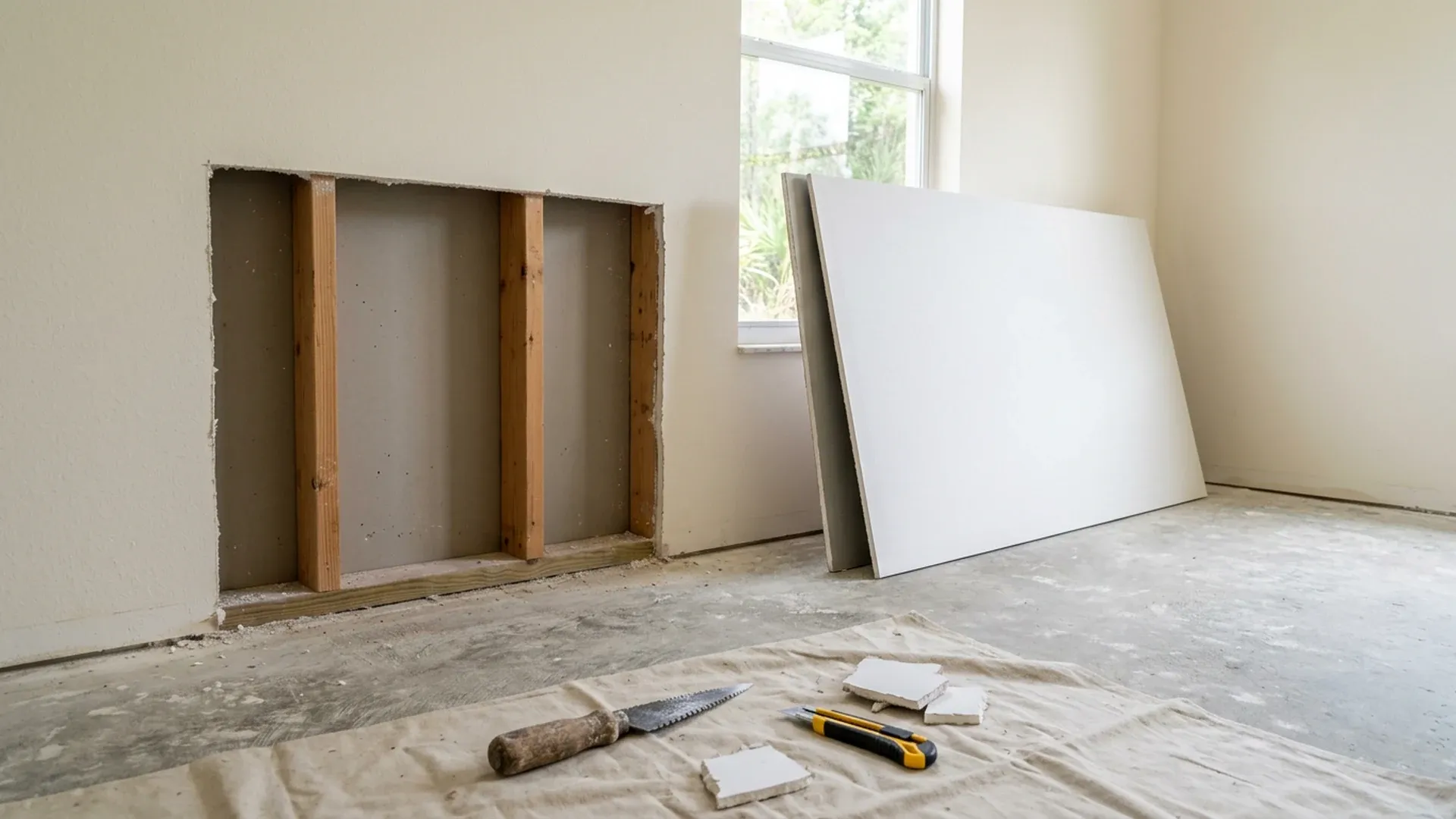
Drywall must be replaced when it fails any of those checks. The Gypsum Association states that board exposed to sewage or flood water must be replaced, because those waters can carry bacteria and other contaminants. Replace board that is swollen, crumbling, delaminating or sagging, that could not be dried in time or that shows mold growth. EPA's flood cleanup guidance notes that mold can grow on drywall that stays wet for more than 24 hours. When a section must come out, a drywall professional shuts off power to the area and cuts back to solid framing so the cavity can be inspected and dried. The Gypsum Association's general guidance is to remove board 12 to 24 inches above the water line, and higher when wet insulation also has to come out.
How to Dry Water Damaged Drywall and the Cavity Behind It
Knowing how to dry water damaged drywall can be the difference between keeping a sound wall and replacing it. EPA says water damaged areas should be dried within 24 to 48 hours, and that in most cases mold will not grow on materials dried in that window. Open the room to air movement, remove baseboards or open the wall if the cavity is wet, and run fans and a dehumidifier. In Southwest Florida the air outside is often warm and humid, so EPA's flood guidance suggests keeping windows shut and using air conditioning, dehumidifiers and fans when outdoor air is very humid. Do not run fans across visible mold, because airflow can spread spores; moldy drywall should be removed rather than dried in place. Do not close a wet cavity or apply paint until the wall is dry all the way through.
Mold Risk: A Short Safety Check
Mold is the main reason to move fast, though this section is a safety check, not a full mold guide. EPA says inhaling mold can cause allergic reactions in sensitive people, and that people with asthma or weakened immune systems should stay away from moldy sites. Look for a musty smell, dark or fuzzy growth and staining on the back of any board that is removed. EPA says a moldy area smaller than about 10 square feet can often be handled by the homeowner, while a larger area or a lot of water damage calls for experienced help. Do not paint over mold, because EPA notes that paint applied over a moldy surface is likely to peel. If you suspect hidden mold inside the wall, EPA suggests hiring an experienced professional rather than opening the wall yourself.
Finishing the Repair: Patch, Texture and Prime
Once the wall and cavity are fully dry, the Gypsum Association says the board should get a final inspection for defects before redecorating. That is the last step in how to repair water damaged drywall: hang new board to the studs where sections were removed, tape and coat the seams in thin layers, sand, match the surrounding texture and prime before painting. Priming evens out how the paint absorbs, so the water damaged drywall repair does not show through the topcoat. Phenomenal Renovation's drywall service lists water damage repair, patch and hole repair, ceiling repair and texture matching among the jobs it handles. If the wall is part of a fire-rated or sound-rated assembly, the Gypsum Association cautions that repairs must follow the original design, including board type, fasteners and staggered joints.
FAQ: Water Damaged Drywall Repair
Can wet drywall dry out on its own?
Sometimes. EPA says materials dried within 24 to 48 hours usually will not grow mold, and the Gypsum Association allows keeping board that dries in that window when the water was clean, the source is fixed and the board is sound. Swollen, crumbling or contaminated board should come out instead.
How do I know if drywall is still wet inside?
A moisture meter can show which areas are wetter than others, but the Gypsum Association says its numbers on gypsum board are not reliable as an exact moisture content. Compare against a wall you know is dry, check the cavity once it is open and replace the board if you are unsure.
Is a brown water stain on a ceiling always a replacement job?
No. A dry, stable stain from an old leak that was fixed may only need a check, a stain-blocking primer and paint. A stain that is growing, soft or sagging points to an active leak and board that should be inspected and probably replaced.
Should I paint over water damaged drywall?
Not until the cause is fixed and the wall is dry all the way through. EPA says not to apply paint or sealants to materials that were wet until they are completely dry, and not to paint moldy surfaces, because paint on mold is likely to peel.
Request a Free Estimate for Water Damaged Drywall Repair
Water damaged drywall repair goes best when the leak is stopped early and the wall is checked before damage spreads. Phenomenal Renovation is a licensed and insured Florida contractor, and its drywall service covers water damage repair, patch and hole repair, ceiling repair, taping, mudding and texture matching in Fort Myers, Cape Coral, Naples, Bonita Springs, Estero and LaBelle. Call (239) 878-3404 for a free estimate, read about our drywall service or see our Fort Myers service area. If mold is widespread, bring in a mold remediation specialist first.
Guidance checked against the named EPA and Gypsum Association sources in October 2026.
Cristiano Barbosa is the Founder & CEO of Phenomenal Renovation, a family-owned remodeling company serving Fort Myers, Cape Coral, Naples, Bonita Springs, Estero, and LaBelle. With over 20 years of hands-on experience and two generations of construction knowledge behind him, he holds both a Certified Residential Contractor (CRC) license and a Licensed Plumber license, letting his crew handle plumbing and waterproofing in-house instead of outsourcing it, and has led his team through more than 350 successful renovations across Southwest Florida.